What is the importance of Brand Awareness and Name Recognition in Lead Generation Campaigns
Why Brand Awareness & Name Recognition Is Your Growth Superpower
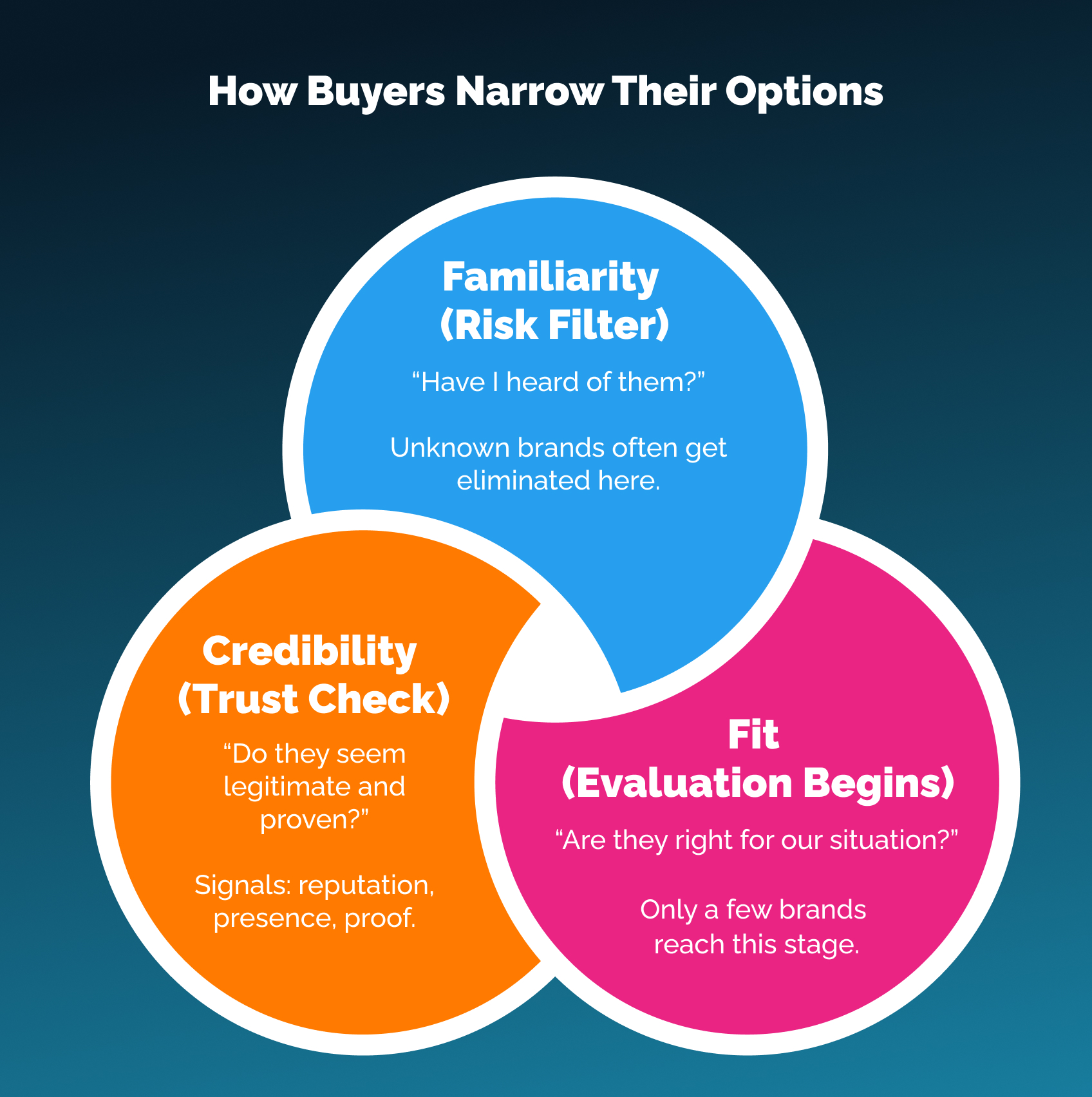
Brand awareness works because buyers use familiarity to reduce risk before they ever compare features, pricing, or demos.
Buyers are overloaded with options especially in SaaS.
When that happens, they don’t start by evaluating everything—they start by eliminating uncertainty. Brands they recognize feel safer, more credible, and easier to justify internally.
That’s why the most successful companies don’t just generate leads. They attract them already warmed by trust.
Brand awareness and name recognition aren’t vanity metrics. They quietly shape who gets evaluated, who gets ignored, and who wins.
1. Understanding the Brand Awareness & Lead Generation Connection
Brand awareness is how easily buyers recognize and recall your brand. But to buyers, awareness isn’t about logos or colors. It’s about perceived reliability.
When buyers recognize a name, they subconsciously associate it with legitimacy, scale, and reduced downside.
That matters long before a sales conversation begins.
Strong brand awareness creates three buyer signals:
- Recognition: Buyers instantly associate your brand with a specific problem or solution.
- Recall: When a need arises, your name comes to mind without prompting.
- Trust: Familiar brands feel less risky, even before proof is reviewed.
Lead generation works best when these signals are already present. Buyers who know your brand don’t need as much convincing.
They click more readily, convert more often, and hesitate less.
This is why brand-aware leads tend to:
- Convert faster
- Cost less to acquire
- Move through sales with fewer objections
Your goal isn’t just visibility. It’s to feel like a known quantity before evaluation begins.
2. How Brand Awareness Changes Buyer Behavior
Brand awareness doesn’t just increase volume. It changes how buyers behave.
When awareness is strong:
- Buyers search for your brand name instead of generic solutions.
- Inbound traffic increases because buyers already trust the source.
- Referrals rise because people recommend brands they feel confident endorsing.
This is why familiar brands often outperform better-positioned but unknown competitors. Buyers facing time pressure or internal scrutiny default to options that feel safer to defend.
Slack is a well-known example. Its growth wasn’t driven by aggressive selling, but by consistent presence in communities, integrations, and conversations where teams already worked. By the time buyers evaluated collaboration tools, Slack felt like the obvious choice.
Brand awareness didn’t close the deal. It earned the right to be considered.
3. Why Name Recognition Accelerates Trust and Selection
Brand awareness gets you noticed. Name recognition gets you chosen.
When buyers recognize a name, skepticism drops. Familiarity reduces the need to prove legitimacy from scratch. Instead of asking “Can we trust them?” buyers move on to “Is this the right fit?”
Strong name recognition helps buyers:
- Shortlist vendors faster
- Feel confident recommending options internally
- Justify decisions to peers and leadership
This is why consistency matters more than novelty.
Repeated exposure in the right contexts compounds trust over time.
Effective ways companies build name recognition include:
- Consistent messaging and visual identity across channels
- Presence in industry publications, podcasts, and communities
- Founder or executive visibility that reinforces credibility
- Customer stories that show real-world outcomes
Zoom’s rise over Skype wasn’t about having a head start. It was about clarity, consistency, and a frictionless experience that reinforced its name at every touchpoint. Recognition turned into preference.
4. Amplifying Brand Awareness Without Diluting Trust
Brand awareness only works when it feels credible. Flooding channels without focus creates noise, not recognition.
High-performing SaaS brands tend to concentrate on a few proven levers:
Content That Builds Authority
Search-driven content, research reports, and long-form resources establish expertise and create repeat exposure. Buyers don’t just read these assets. They reference them, share them, and return to them.
Social Presence That Reinforces Perspective
Thoughtful commentary, case insights, and behind-the-scenes expertise build familiarity without feeling promotional. Over time, buyers associate your brand with how they think about the problem.
Paid Media That Supports Recall
Search and retargeting ads reinforce recognition rather than introduce cold concepts. When buyers see a familiar name again, confidence compounds.
Partnerships and Earned Media
Podcasts, guest articles, and strategic collaborations allow you to borrow trust while reinforcing your own credibility.
Each of these channels works best when they consistently reinforce the same position, problem framing, and values.
5. Measuring Brand Awareness as Buyer Signals
Brand awareness should be measured the same way buyers experience it: as confidence signals, not just marketing metrics.
Key indicators include:
- Branded search volume: Buyers actively seeking you out
- Direct traffic growth: Intentional return visits
- Referral traffic: Trust transferred from third parties
- Lead quality: Higher readiness and alignment during sales conversations
- Lower acquisition costs: Familiarity reducing persuasion effort
When these metrics improve together, it’s a sign that buyers are entering your funnel with fewer doubts and clearer intent.
Final Thought: Brand Awareness Wins Before the Sale Starts
Brand awareness and lead generation aren’t separate strategies.
Brand awareness shapes who gets considered.
Lead generation captures those already leaning in.
Buyers don’t want to take risks they can’t explain.
Familiar brands feel easier to trust, easier to justify, and easier to choose.
If you want more qualified leads, faster decisions, and lower resistance, focus on becoming recognizable in the moments that matter most—before buyers ever start comparing options.
That’s where real SaaS growth begins.

Written by: Andy Halko, CEO, Creator of BuyerTwin, and Author of Buyer-Centric Operating System and The Omniscient Buyer
For 22+ years, I’ve driven a single truth into every founder and team I work with: no company grows without an intimate, almost obsessive understanding of its buyer.
My work centers on the psychology behind decisions—what buyers trust, fear, believe, and ignore. I teach organizations to abandon internal bias, step into the buyer’s world, and build everything from that perspective outward.
I write, speak, and build tools like BuyerTwin to help companies hardwire buyer understanding into their daily operations—because the greatest competitive advantage isn’t product, brand, or funding. It’s how deeply you understand the humans you serve.