Every Visit Now Carries More Psychological Weight
When traffic was abundant, inefficiency was survivable. You could afford vague headlines, slow narrative buildup or pages that required “exploration”.
Buyers had time. And you had retries. That world is gone. In an Answer Engine world, every visit carries more psychological weight – because fewer of them arrive, and they arrive much later in the decision process.
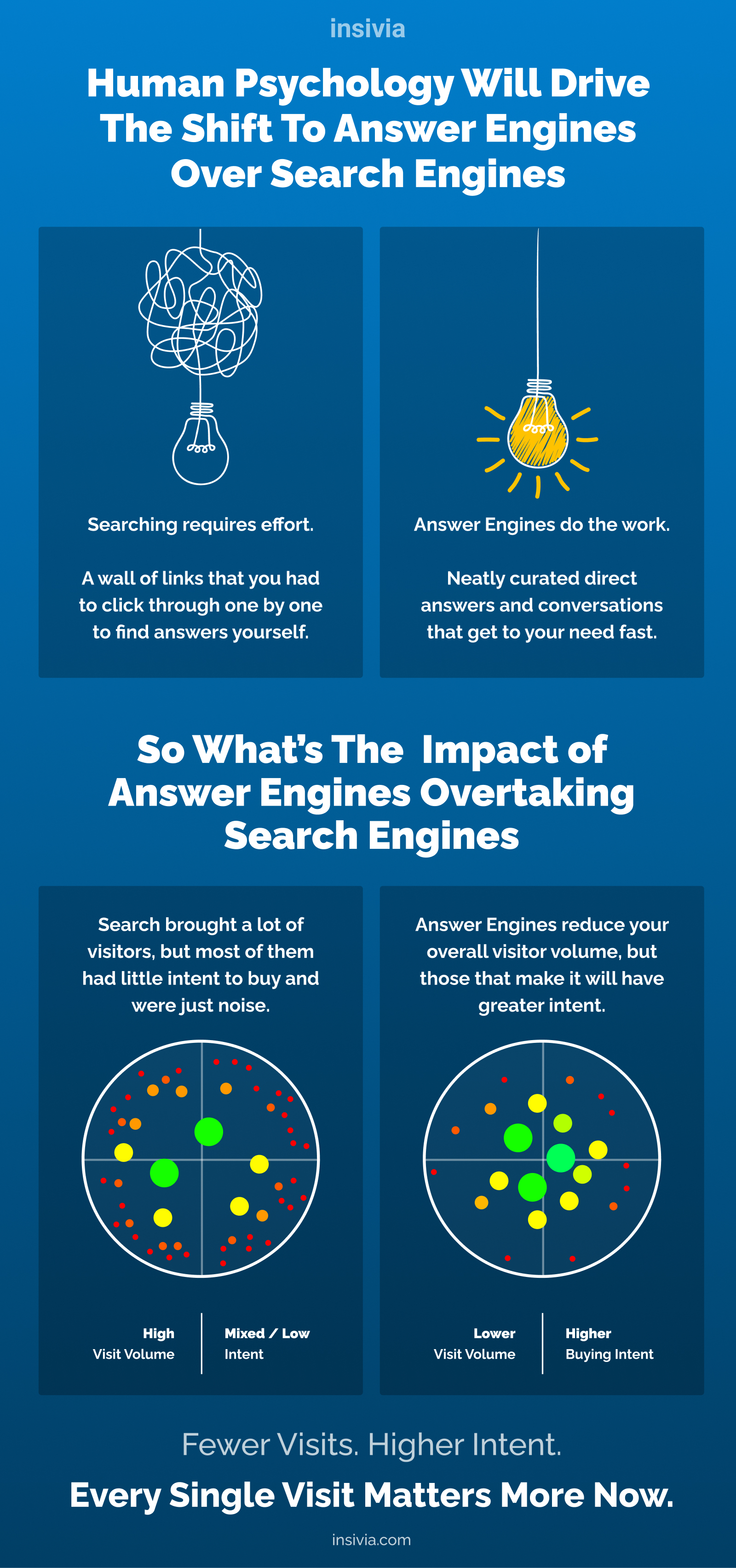
Fewer Visits Means Higher Decision Pressure
This isn’t just a math problem. It’s a cognitive one. When buyers click through from an Answer Engine, they are already carrying a formed belief, a narrowed set of options, or a provisional decision.
They are not browsing. They are testing alignment. That means each visit is no longer a “touchpoint.” It’s a judgment moment. And judgment moments are fragile.
Late-Stage Buyers Think Differently
Early-stage buyers ask: “What is this?” “Do I need this?”
Late-stage buyers ask: “Is this safe?” “Is this credible?” “Can I justify this choice?”
That shift changes what your site is responsible for.
At this stage:
- novelty is a liability
- cleverness creates friction
- ambiguity feels risky
The buyer’s brain is scanning for reasons not to proceed. Anything unclear is interpreted as a threat.
Cognitive Load Is the Silent Conversion Killer
When intent is high, tolerance is low. If a buyer has to decode your positioning, interpret your value, or connect dots you didn’t connect for them – you are increasing cognitive load at the exact moment they are trying to reduce it.
This is why late-stage visitors bounce fast—not because they lack interest, but because their brain says: “This feels harder than it should.” In a high-intent moment, effort equals doubt.
Why Friction Is More Expensive Than Ever
Before, friction slowed conversion. Now, friction breaks momentum. Because Answer Engine visitors don’t “keep looking around.” They don’t read three pages to figure you out. They don’t warm up over time. They validate fast—or disengage. And when they disengage, they don’t drift away slowly.
They go back to the engine.
Which means:
- you’re not compared further
- you’re not reconsidered
- you’re not re-entered later
You weren’t rejected. You were filtered out.
Clarity Is No Longer a Brand Choice
It’s a Survival Mechanism. In this environment, clarity does the heavy lifting. Not branding theater. Not storytelling arcs. Not feature tours.
Clarity means:
- immediate orientation
- precise language that mirrors buyer thinking
- obvious relevance within seconds
The goal is not to impress. It’s to lower the psychological cost of saying yes. Buyers don’t convert when they’re excited. They convert when they feel safe proceeding.
Every Page Is Now a Trust Interface
Because visits are fewer, each one must do more.
Every page must:
- justify the click that brought them there
- reinforce the engine’s implied recommendation
- remove hesitation, not introduce it
Your site is no longer a marketing asset. It’s a decision support system. And decision systems are judged harshly. If they feel bloated, indirect, unclear, or self-focused. They fail.
This Is the New Reality of High-Intent Traffic
Answer Engines didn’t make conversion harder. They made misalignment more visible. They expose weak positioning, inflated claims, and unnecessary complexity.
Because when every visit carries weight, there’s nowhere to hide friction. The companies that win won’t be the ones who get traffic back. They’ll be the ones who understand this shift: Fewer visits don’t reduce opportunity. They concentrate it. And when opportunity is concentrated, clarity becomes the highest-leverage strategy you have.